Saturday, December 31, 2011

New Honda NSX


Honda NSX had prepared supercar coupe hybrid that capitalizes engine with four-wheel drive that will be premiering at the Detroit Motor Show 2011.

Honda NSX supercar is capable of spraying power of 400 horsepower on four wheels driving. Confirm the presence of the new Honda NSX in Detroit, and put up with the Audi R8 bersing.

Some details NSX photos have been circulating in cyberspace. However, the actual face of the new NSX could be seen in Detroit in 2012. Honda is preparing the final production in both coupe and roadster look.

Honda NSX power source comes from the 3.5-liter V6 engine of the shaft. Power is channeled to all wheels with traction 400bhp. Performance Acceleration 0-100 km / h in under five seconds.

As reported by Autocar, President and CEO of Honda Takanobu Ito said at the Frankfurt Auto Show 2011, that the project to assemble the New NSX have a green light. Ito added that the work has begun.

New new NSX will use a customized path to economic trends that are popular in the automotive world today. This shows that the car will depend on the ratio of power and weight of the car to improve performance.

"You can not depend on a high output power to call a supercar. The new NSX is a car with high power and must also be combined with a good driving performance. NSX using aluminum materials. We do not want to cheat a Ferrari, but also the pursuit of efficiency fuel, "a source beber executive

Mercedes 300 SL Gullwing

Eternal youth is a miracle bestowed on only a small number of cars, and the Mercedes-Benz 300 SL coupe is one of this elite group. The Stuttgart-based brand unveiled its new sports car in February 1954 at the International Motor Sports Show in New York, and in so doing lit the fuse for an icon of the automotive world. With its flat, graceful body, the 300 SL had lost nothing of its freshness even as the millennium drew to a close and was voted "Sports car of the Century" in 1999. "Gullwing" doors provided that essential touch of inspiration, opening up towards the sky to reveal a tightly sculptured interior. The history of the Mercedes-Benz 300 SL Gullwing is inextricably linked with the life of an influential admirer. American importer Maximilian E. Hoffman it was who urged Mercedes-Benz to build a road car in the image of its racing coupe, the start of production in 1954 providing a sweet fruit for his endeavors. The assembly lines may have waved goodbye to the last of the only 1,400 units of the 300 SL coupe ever made in 1957, but the spirit of this extraordinary car most certainly lives on.
From the race-track to the road
The Mercedes-Benz 300 SL was conceived initially as a purpose-built racing sports car (W 194). In 1952, the coupe notched up an impressive record of success in the year's major races. At the Grand Prix in Bern the 300 SL sealed a clean sweep of the podium places, an awesome performance backed up by a one-two finish ahead of a stunned field in the 24 Hours of Le Mans. The Nürburgring duly yielded another one-two-three, and the new Mercedes racing sports car also claimed victory in the Carrera Panamericana in Mexico. It all added up to a majestic return to motor sport for Mercedes-Benz, picking up where the brand had left off during a highly successful period before the Second World War.


The two models were due to celebrate their premieres less than six months after the Board had granted the project their approval. The occasion was the International Motor Sports Show taking place in New York from February 6-14, 1954 and at the time America's most important auto show. The engineers rose to the challenge of their race against the clock, and the 300 SL and its smaller brother, the 190 SL, were ready to receive the acclaim of the admiring crowds. Series production began in Sindelfingen in August 1954 and the price was fixed at 29,000 Marks - a quite enormous sum at the time, especially when you compared the new model alongside the Mercedes-Benz 170 Vb - on sale at 7,900 Marks.
The body
The body of the Mercedes-Benz 300 SL Gullwing was developed with the primary aim of cutting aerodynamic drag to a minimum. The result was a streamlined form with few adornments, a car which adhered faithfully to its design brief and which has retained its freshness and allure to the present day. Wonderfully proportioned and extremely dynamic, it was as if the 300 SL - surging forward on its wheels - had been cut form a single mold.
The new sports car was a real crowd-puller, thanks in no small measure to its wonderfully charismatic "gullwing" doors. Rather than serving merely as a stylistic gimmick, they represented the central element of the 300 SL design, the ultimate example of necessity as the mother of invention. The car's aluminum skin was stretched over a tubular frame, which - in the interests of stability - rose much further than usual up the sides of the vehicle, making it impossible to fit conventional doors. The response of the engineers was to devise an upwards-opening door concept. The elegance of the car's side view remained undisturbed by a door handle, with a discreet pull-out bar disengaging the lock. The door then opened upwards with the help of a telescopic spring.
The tubular frame for the Mercedes-Benz 300 SL, designed by Rudolf Uhlenhaut, reduced weight to a minimum but provided maximum strength. A series of extremely thin tubes were welded together into triangles to produce a frame which boasted impressive torsional stiffness and was only subjected to compression and tensile forces. In the standard SL the frame tipped the scales at only 82 kilograms, whilst the complete car in ready-to-drive condition and including the spare wheel, tools and fuel weighed in at 1,295 kilograms.
The body of the 300 SL was constructed largely out of high-grade sheet steel, although aluminum was used for the engine hood, trunk lid and the skin panels for the door sills and doors. For a relatively small extra charge, customers could choose to have the whole body made from light alloy, which cut 80 kilograms off the car's total weight. However, only 29 SL customers took up this option and today their cars are highly sought-after rarities.
The technology
The technical make-up of the 300 SL owes much to the Mercedes-Benz 300 (W 186 II) sedan, the vehicle of choice for many statesmen and industrialists and also known as the "Adenauer Mercedes". The six-cylinder engine featured a number of modifications, one of which saw the carburetor replaced by a direction injection system - a technical advance which was years ahead of its time. This new technology boosted output to 158 kW (215 hp) and the car's maximum speed up as far as 260 km/h, depending on the rear axle ratio. Customers could order their SL with a choice of five different ratios. The standard 1:3.64 variant was set up primarily to deliver rapid acceleration and capable of 235 km/h. The 1:3.89 and 1:4.11 ratios were good for even faster acceleration, whilst the 1:3.42 option offered a higher top speed. This figure rose still further - to 260 km/h - when the ratio was set at 1:3.25. However, this "resulted in greatly reduced acceleration, making the car less enjoyable to drive in downtown city traffic," as the sales information pointed out. The 300 SL hit 100 km/h in just 10 seconds, with car testers at the time measuring fuel consumption at an average of 15 liters per 100 km. A 100-liter fuel tank was positioned at the rear of the car and could be enlarged to 130 liters at an extra charge.
The engine had to be tilted 45 degrees to the left in order to squeeze under the hood of what was an extremely flat car, thus reducing the amount of space in the passenger-side footwell. The SL's center of gravity was almost exactly in the middle of the car, laying the perfect foundations for fast and precise cornering. The chassis was essentially the same as the 300a sedan's, but with sportier tuning, and the drum brakes were adapted in response to the increased performance of the muscle-bound sports car. Only later, in the 1961 roadster variant, were these replaced by disc brakes all round.
The interior
The interior of the Mercedes-Benz 300 SL Gullwing was more solid than spectacular. The standard fabric seat upholstery was available in a choice of three checked patterns, but most customers opted for leather instead. The body paintwork came in silver metallic as standard, although red, dark blue and black also proved popular.
A shortage of space made getting into the 300 SL something of a challenge - this was, after all, a sports car. Fortunately, the steering wheel could be folded down, allowing the driver to twist his or her legs in the direction of the pedals. Once seated, the driver enjoyed an ergonomically impressively refined cockpit design. The steering wheel was just the right distance for the arms to reach and the driver's feet moved intuitively onto the pedals: the 300 SL was very much a driver's car. In addition, the instrument panel was extremely tidy and clearly laid-out, with the rev counter and speedometer in the center of the driver's field of vision, as you would expect.
The handling characteristics
Out on the road, you quickly realized why the Mercedes-Benz 300 SL had been christened with those particular letters - the car was certainly Sporty and Light. With an engine delivering 215 hp and a total weight of only around 1,300 kilograms, acceleration was suitably impressive - especially with the right choice of rear axle ratio. Exceptional torque ensured good pulling power at any speed. The steering was direct and the suspension made sure that the car hugged the road nicely. There's no doubt that the 300 SL was a sports car of the finest pedigree. That said, it was far from impractical, as many owners were quick to appreciate. For them, this was a high-speed touring car which offered precise driving characteristics but which avoided sapping the energy of the driver unduly. The trunk was sufficiently large, complemented as it was by the extra room behind the seats for additional baggage. Plus, customers could order a made-to-measure luggage set designed to make the most of the space available.
How the press saw the 300 SL
The press at the time were falling over themselves to lavish praise on the Mercedes 300 SL. "Autosport" reported that: "The exterior form of the 300 SL is quite wonderful and its performance almost unbelievable. The construction of the car and its production quality are first class and the whole concept represents an uncompromising realization of all the new ideas." After its initial test, "Road & Track" wrote: "We are looking at a car where a comfortable interior is complemented by remarkably impressive handling characteristics, quite incredible roadholding, light and precise steering, and performance levels which are up there with - and even an improvement on - the best cars the automotive industry has to offer. There is only one thing left to say: the sports car of the future has become a reality." And "auto, motor und sport" noted: "The Mercedes 300 SL is the most refined and at the same time the most inspirational sports car of our era - an automotive dream."
Maxi Hoffman keeps up the pressure
The first units of the Mercedes-Benz 300 SL were sold in Europe in 1954, whilst Maxi Hoffman received his first customer car in March 1955. A total of 1,400 Gullwings rolled off the production line, the lion's share of which - some 1,100 units - found their way to the USA. Hoffman had thus assessed the response of the market to the car extremely well and had every right to be satisfied with his work. However, he had also succeeded in stoking the expectations of his discerning customers, who now wanted a touch more comfort in their cars, a larger trunk and, in many cases, a cabriolet version. Hoffman passed the message on to Stuttgart and once again his request bore fruit - this time in the form of the 300 SL roadster (W 198 II) unveiled in 1957.
Success on racetracks and rally courses
The racing genes of the 300 SL tempted renowned racing drivers and privateers from all over the world to enter sports car races and rallies. The 300 SL made its first appearances in the popular racing events of the time in 1955 - and didn't have to wait long before tasting success. The Mercedes-Benz 300 SL Gullwing attained legendary status well before the assembly lines ground to a halt, thanks in part to its success in race competition but most of all to the captivating allure of its stunning design. The 300 SL has been counted among the world's most sought-after and highly rated cars for 50 years now, and its status as one of the most revered classic automobiles on the market is set to remain intact for quite some time to come.

Tuesday, December 27, 2011

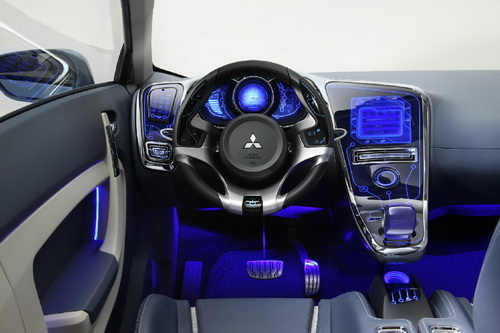
Mitsubishi RVR 2012

The new Mitsubishi RVR provides outstanding fuel efficiency from its lightweight, compact body. With the panoramic field of view of an SUV, the Mitsubishi RVR is easy to drive and provides turn-on-a-dime maneuverability. The vehicle is the ideal compact crossover, with ample luggage space for every application from daily driving to leisure outings.
The power train combines a 1.8-liter, 16-valve DOHC MIVEC engine with an INVECS-III sport mode 6-speed CVT. The vehicle features a regenerative braking system (high-efficiency electric power generation control), electric power steering, improved aerodynamics and other low-fuel consumption technologies down to fine detail, resulting in a 75% reduction from the Japanese FY 2005 emissions gas standards and exceeding the FY 2010 fuel efficiency requirements by 15%. All models qualify for the Japanese eco-car tax reduction (50% tax reduction to promote the popularization of environmentally-friendly cars).


The Mitsubishi RVR also incorporates super-wide HID headlights which provide a wide, ultra-bright beam for safe night driving, a panoramic glass roof (with LED illumination) for a sense of spaciousness during the day and a romantic ambiance at night, and push-button ignition. The vehicle has a refined and sporty interior with a black color scheme, silver highlights, and smooth, soft padding.
Exterior
"Jet fighter" grille, the design identity of Mitsubishi Motors, on the front mask.
Sporty, energetic exterior lines and a curving roof line with superior aerodynamics considering front, side and rear drag reduction, to express a dynamic silhouette.
LED brake lights at the rear which provide superior visibility.
Available in eight body colors including two new colors "Titanium Metallic Gray" and "Kawasemi Metallic Blue," which resembles the stunning azure feathers of the kingfisher (kawasemi in Japanese).
Interior
Comfortable passenger interior using smooth, soft padding, mesh fabric, and a sporty appearance with silver highlights accenting the black keynote color scheme.
Elegance with plating on the gearshift frame and a genuine leather-trimmed steering wheel and gearshift knob.
Packaging
Compact body with a total length of 4,295mm; superior packaging featuring a panoramic field of view for easy travel around town.
Comfortable interior space and superior stability from the 2,670 mm-long wheel base.
Power Train
The power train combines a high-output, high fuel efficiency 1.8-liter, 16-valve DOHC MIVEC engine (maximum output: 102kW[139PS]/6,000rpm; maximum torque: 172Nm [17.5kgfm] / 4,200rpm) with a paddle shift INVECS-III sport mode 6-speed CVT. Low (Japanese 10-15 mode) fuel consumption at the best level in its class of 15.2km/L for 2WD and 15.0km/L for 4WD models, achieved from a regenerative braking system (high efficiency electric power generation control), electric power steering, reduced friction engine and other fuel efficiency technologies combined with improved aerodynamic performance, resulting in a 75% reduction from the Japanese FY 2005 emissions gas standards (☆☆☆☆) and exceeding the Japanese FY 2010 fuel efficiency requirements by 15%. All models qualify for the Japanese eco-car tax reduction (50% tax reduction to promote the popularization of environmentally-friendly cars).
4WD System
The 4WD models adopt the electronically controlled 4WD system also used for the Outlander and the Delica D:5 that tailors traction control to the front and rear wheels to match driving conditions, where a selector gives the driver the choice of three driving modes (2WD, 4WD AUTO and 4WD LOCK).
Vehicle Control Technologies
Active Stability Control (ASC) is standard equipment on all 4WD models (and a factory option on 2WD models). ASC supports vehicle stability by detecting vehicle conditions and driving operations based on data from all types of sensors and Electronic Control Units (ECUs), and applying braking pressure and regulating engine torque as appropriate to prevent skidding and unstable movement as a result of sudden steering or loss of traction on slippery surfaces.
Hill Start Assistance (HSA), an electronic parking brake which detects slope and prevents the vehicle from backsliding when starting on an incline, is standard equipment on all 4WD models (and a factory option on 2WD models).
Vehicles are equipped with cruise control for highway driving.
Body & Chassis
For low fuel consumption, the Mitsubishi RVR adopts column electric power steering (EPS), LED brake lights, and tires which balance low fuel consumption and high performance: 215/60R17 tires on 17-inch aluminum wheels for "G" trim levels and 215/65R16 tires on 16-inch steel wheels with full wheel covers for "M" and "E" trim levels.
The high-flexibility, highly resilient front fenders improve shock resistance and decrease body weight.
MacPherson strut front suspension and multi-link rear suspension.
Utility
Panorama glass roof (with LED illumination) for a sense of spaciousness during the day and a romantic ambiance from amber-colored indirect lighting at night as a factory option.
Push-button engine switch for smooth engine start-up.
Multi-information Display (MID) with superior visibility as standard equipment on "G" trim levels. The MID indicates average speed, fuel efficiency, remaining fuel, warnings and other vehicle information using an easy-to-read color LCD screen.
Versatile storage space near the instrument panel, including a convenient passenger seat glove compartment, a floor console box, a small article box in front of the shifter and a console box between the two front seats.
Tilt and telescoping steering wheel to adjust the steering wheel height and angle for the optimal driving position.
The second-row seats are adjustable-return seats which fold forward for storage and provide two reclining positions. They can be returned from the storage configuration to either reclining position in a simple one-step operation, with the return seat position determined by the speed at which the seats are pulled back up.
High-capacity 419L luggage space with ample room for golf bags, suitcases and camping gear, plus a separate underfloor storage area for easy storage of wet or dirty items.
Rear seat center armrest pass-through for storage of long items (skis, etc.) as standard equipment on "G" trim levels.
Luggage compartment equipped with convenient retaining hooks to hold luggage in place.
Mitsubishi Multi-communication System (MMCS) with a 40GB hard disk drive (music server capacity for approximately 3,000 songs), full-segment (both 1-segment and 12-segment) terrestrial digital TV tuner, rearview camera to assist the driver when reversing the vehicle, and 7-inch wide screen display.
Replete in-car entertainment including a "link system" with USB, Bluetooth and other connections for portable music players and other external devices; hands-free phone system for Bluetooth-compatible mobile phones.
Rockford Fosgate Premium Sound System for enjoyment of dynamic concert-hall quality sound offered as a factory option on "G" trim levels (requires the MMCS option).
Safety Equipment
Super-wide HID headlights which provide a wide, ultra-bright beam for safe night driving.
Adjustable force-limiter seatbelts to mitigate the impact on passengers in case of collision. SRS knee airbags for the driver seat which reduce the risk of injury to the lower abdomen is standard equipment on all models. Side and curtain airbags are available as a factory option.
Emergency Stop Signal System (ESS) as standard equipment on all models. The ESS automatically blinks the hazard lights upon sudden braking or operation of the Anti-lock Braking System (ABS), to warn following drivers.
Mitsubishi Motors' proprietary Electronic Time and Alarm Control System (ETACS), which can customize various electronic systems in line with customer preferences, as standard equipment on all trim levels.

Mitsubishi i-MiEV

Making the best use of the mid-ship architecture of this new urban vehicle, the electric "i" or "i MiEV" then was announced in October 2006 as a research vehicle powered by a compact and lightweight motor and high-energy density lithium-ion batteries.
Less than 3 years later, once a thorough development process was completed accumulating over 500,000 km of testing, the car was launched in Japan as "i-MiEV" in July 2009 first with fleet customers. Books were then opened for private customers as well, the first deliveries to this second wave of Japanese clients taking place from April 2010.
The next commercial step starts today in Paris, prior to a start of production at MMC's Mizushima plant in October. Deliveries to European customers will then start in 14 selected markets from December 2010, depending country by country.
40 years of EV know-how at Mitsubishi
When announced as an EV research vehicle back in October 2006, the then non-hyphened "i MiEV" was the outcome of forty years of research and development at Mitsubishi in the area of electric powertrain.


Mitsubishi Motors was also one of the first auto manufacturers to recognize the superiority of the lithium-ion battery over lead-acid batteries in terms of energy and output densities as demonstrated through the development in 1994 of the Chariot HEV plug-in hybrid, itself followed by various and successive testing programs to seek further improvements in performance, safety, reliability and durability.
Over 500,000 km of thorough testing
With the intention of moving the then "i MiEV" into commercial production Mitsubishi Motors carried out a number of in-house testing programs where the car sailed through, including extensive poor surface track, durability and reliability and crashworthiness.
In parallel, Mitsubishi i-MiEV went through a process of acquiring data through extensive fleet testing under a variety of climatic and real driving conditions. As an example, in Japan, a year-long joint proving program with 7 Japanese power companies using 37 development cars was carried out, covering a total of 300,000 km of testing and everyday commercial use.
The same process was engaged outside of Japan as well. In the case of Europe, 11 cars were used for a further 200,000 km of testing in a joint effort among Mitsubishi Corporation, its MC Automobile (Europe) N.V. subsidiary, Mitsubishi Motors Corporation and Mitsubishi Motors Europe towards European customers, be they corporate or private.
Self (battery)-reliant
In a further step towards making electric vehicles a viable business proposition, on December 12, 2007 Mitsubishi Motors Corporation joined hands with GS Yuasa Corporation and Mitsubishi Corporation and set up "Lithium Energy Japan" (LEJ), to develop, manufacture and sell large-size lithium-ion cells.
Within the LEJ joint-venture each partner brought its own leading know-how:
  • GS Yuasa possesses advanced technologies in large lithium-ion batteries and is striving to broaden their applications.
  • Mitsubishi Corporation intends to enter the battery manufacturing business and aims to create other related businesses as well.
  • Mitsubishi Motors Corporation - which had electric cars on the road in Japan as early as 1971 - is working to strengthen its prominent position in (proprietary) EV technology.
LEJ plans to ramp up production of lithium-ion cells for use in powering Mitsubishi i-MiEV, enough from a start during FY2009 at its new plant in Kusatsu City Shiga Prefecture - the world's first plant dedicated to the mass-production of lithium-ion batteries for EVs, and to increase production volume thereafter with appropriate capacity to accompany the sales development of MMC's EVs:
  • 2,300 units (= equivalent of Mitsubishi i-MiEV traction battery packs) from June 2009,
  • 4,500 units from June 2010,
  • With the start of production at LEJ's Kyoto plant the figure should reach 11,000 units,
  • Lastly, the Ritto plant should allow for a total of 50,000 units from December 2012.
Space saving architecture
As a reminder, Mitsubishi i-MiEV is based on the "i" minicar platform where the rear-midship petrol engine and floor-mounted central fuel tank are replaced with a lithium-ion traction battery pack, the motor, the inverter and other EV components with only a modicum of modifications required to turn the petrol "i" into Mitsubishi i-MiEV.
This feature allowed the installation of a large capacity high density lithium-ion 88-cell traction battery pack within the long 2,550 mm wheelbase, i.e. without compromising seating for 4, whilst lowering the center of gravity of the car (by 65 mm vs. the petrol-powered "i") and protecting the batteries in case of a crash. Same for replacing i's 660 cc internal combustion engine with the 66.6ps/49 kW permanent magnet synchronous electric motor and ancillaries which preserved all 227 l of luggage space (extended to 860 l when both rear seats are folded down - VDA method).
High Capacity / Low costs
EV traction batteries must have high energy density. For that purpose, Mitsubishi i-MiEV utilizes LEJ's specifically developed high density lithium-ion battery pack, where each high capacity battery module can fit under the floor.
By design, Mitsubishi i-MiEV accepts 2 types of traction battery charging systems:
  • The "Household Charging System" for anywhere near an ordinary electric outlet, via the household charger plug located on the right side of the vehicle: using European 230V 1 phase (16A) current, Mitsubishi i-MiEV can be re-charged in 6 hours from "Low Energy" warning. (Actual charging times may vary depending on such factors as air temperature and power source status).
  • The "Quick Charger System" for speedy charging - where utilities, power companies, municipalities or corporations have installed quick chargers. There, Mitsubishi i-MiEV can be connected via the Quick Charger plug located on the left side of the vehicle: using the three-phase 200V 50 kW Quick Charge System, the car can be recharged from zero to 80% of its total charge in about 30 minutes (Actual charging times may vary depending on such factors as air temperature and power source status).
Motor (power unit)
Mitsubishi i-MiEV uses a high-efficiency compact and lightweight permanent magnet synchronous electric motor specially developed for the vehicle.
This unit generates maximum torque from low engine speeds (180 Nm - 0 to 2,000 rpm) to deliver powerful response (66.6ps/49 kW) and a seamless driving experience. When the vehicle slows down the regenerative braking system causes the motor to operate as a generator, the energy recovered being stored in the drive battery.
Transmission
Mitsubishi i-MiEV uses a lightweight and compact single-speed reduction gear transmission, exploiting the high low-end torque inherent to the electric motor and eliminating the need for complex gear shifting mechanisms as found in internal combustion engine powered vehicles.
On-board charger
Mitsubishi i-MiEV comes with a compact, lightweight on-board charger that allows the traction battery to be charged using a domestic AC line (voltage depends on the country).
DC/DC converter
The DC/DC converter is used to charge the 12-volt auxiliary battery and power electrical equipment. It is integrated with the on-board charger in a single unit to reduce size and weight.
Inverter
Mitsubishi i-MiEV 's motor is driven by an alternating current. The inverter converts high-voltage direct current from the traction battery to alternating current and supplies motor with the power required to drive the vehicle.
"MiEV OS" operating system
In this respect, Mitsubishi's "MiEV OS" (or "MiEV Operating System") - an advanced integrated vehicle management system into which the company has poured its wealth of know-how gained from decades of electric vehicle R&D - has provided the kind of high performance and reliability that befits a new-generation EV. "MiEV OS" has been awarded "2009 Japan Automotive Hall of Fame Car Technology of the Year" by the Japan Automotive Hall of Fame, a non-profit organization.
"MiEV OS" gathers data and information from all the major EV components to provide integrated management of the car's performance. This advanced management system constantly monitors battery status and the energy recovered from the regenerative brakes while regulating output to ensure smooth and powerful acceleration from a full stop. As a result the system optimizes and minimizes energy consumption to deliver the most appropriate actual on-road performance.
Living
Meant to be driven and used just as "normally" as a traditional ICE-powered car, Mitsubishi i-MiEV is a compact runabout which seats 4 within a short 3,475 m footprint, with the added bonus of 4 large doors, a real trunk (227 l of luggage space - extended to 860 l when both rear seats are folded down - VDA method) and a tight 4.5 m turning radius
Driving
In addition, Mitsubishi's i-MiEV adds range (150 km - "New European Driving Cycle "protocol), real life performance (top speed governed at 130 km/h, swift accelerations thanks to the 180 Nm of torque available from standing start), ultra-low well-to-wheel emissions, superior quietness and low level of vibrations to its potential customers.
When driving, the man-machine interface is materialized through two devices:
  • Combination meter instrument cluster: It includes 1) an energy usage indicator that presents a visual display of power consumption and energy recovery status, 2) an energy level gauge that indicates how much remaining power there is left in the traction battery, and 3) a cruising range indicator that displays an estimate of how far the vehicle can be driven on the basis of average power consumption over the last few kilometers.
  • Shift selector: Similar to the one of a traditional automatic gearbox, to accentuate the "regular car" feeling, it offers the usual P (Parking), R (Reverse), N (Neutral) and D (Drive) normally found with an A/T.
In addition, Mitsubishi i-MiEV also features two specific positions:
  • B (Brake) which Increases the regenerative brake bias (for downhill driving).
  • C (Comfort) which reduces the regenerative brake bias (for suburban driving).
Safety
As with all MMC vehicles, i-MiEV has been designed with a high standard of active & passive safety, including the specifics of its powertrain:
  • i-MiEV features MMC's patented "RISE" design meant to integrate and interconnect structural elements for an active protection of the passengers during an accident. This design brings dramatic advances in multi-directional impact safety performance, dispersing energy loads during front, side and rear crashes and controlling distortion.
  • The high voltage system traction battery pack is located inside the body frame - itself within the wheelbase - and is further protected by a well-crib frame against damage from any direction of impact.
  • The rear combination lamps use fast-illuminating LED emitters for the tail and stop lamps, making these lamps more instantly visible to following vehicles while also cutting power consumption.
  • Further standard safety measures include 6 airbags (driver + passenger + 2 x side + 2 x curtain) as well as Active Stability Control.
Cost of ownership
Translating the EV experience in financial terms, Mitsubishi i-MiEV's energy costs are minimal. In Europe and taking France as an example, a complete charge costs about € 2,00: just as low as the overall running costs of the vehicle, EVs being freed from the maintenance constrains of internal combustion engines and their transmission system.
Furthermore, Mitsubishi Motors plans to set the price (car + traction batteries) of the European-spec i-MiEV to around €33,000 - €35,000 (or equivalent) so that the final cost to the customer after government incentives (where applicable) remains under €30,000 (or equivalent) in a majority of the countries it is to be sold in.
Last but not least, MMC will offer a specific 5 year - 100,000 km warranty on all EV components.
From Japan to Europe
Whilst essentially the same car as the Mitsubishi i-MiEV sold in Japan since the summer of 2009, the EU-spec. version has been further developed to add a left-hand-drive version for continental markets and to comply with local regulations, including:
  • Larger front bumper & newly-designed rear bumper,
  • New lightweight aluminum wheels,
  • Rear fog lamp,
  • Larger outside rear view mirror,
  • Immobilizer,
  • ISO-FIX child seat anchors,
  • 9-inch brake booster,
  • Active Stability Control (ASC),
  • Side & curtain airbags,
  • Large head restraints,
  • Seat belt warning lamp,
  • Day-time running lights,
  • Specific left-hand drive developments (dashboard, wash-wipe & HVAC systems, etc,…)

Sunday, December 25, 2011

2054 Lexus Minority

In the year 2054, some cars will be self-cleaning, some will drive in an accident free system, and some will change colors on command. At least that’s the vision of the future in Steven Spielberg’s upcoming film “Minority Report,” starring Tom Cruise. The film, based on a short story by science fiction writer Philip K. Dick, is an action-detective thriller set in Washington, D.C. in 2054, where police utilize a psychic technology to arrest and convict murderers before they commit their crime. Tom Cruise plays the head of this precrime unit and is himself accused of the future murder of a man he hasn’t even met.
When it came time to conceptualize automotive transportation for the futuristic setting, Spielberg turned to Lexus as a potential partner. “I’ve been driving a Lexus SUV,” Spielberg said. “And I thought Lexus might be interested in going into a speculative future to see what the transportation systems and cars would look like on our highways in 50 years.


The result of that exploration is something that elevates and transforms driving into an environmental experience.


Lexus LFA

The new Lexus LFA marks an important moment in both the history of Lexus and the development of the supercar. A true "clean-sheet" design, the Lexus LFA was created by a small, passionate and dedicated team of engineers whose achievement has been to push the boundaries of technologies materials and engineering at every stage to produce a car like no other to have carried the Lexus badge.
Constructed using advanced carbon fibre technology, the rear-wheel drive Lexus LFA is powered by a bespoke, high-revving 552bhp 4.8-litre naturally aspirated V10 engine, matched to a rear-mounted six-speed sequential automatic transmission, giving 200mph-plus performance.


In the words of Chief Engineer Haruhiko Tanahashi: "The Lexus LFA is a thoroughbred supercar, a machine engineered to achieve a single goal - to deliver a supreme driving experience. Over the past decade we have pushed every boundary in pursuit of this goal and I believe we have created the most driver-orientated car we possibly could."
CARBON FIBRE CONSTRUCTION
Keeping the car's weight to an absolute minimum was one of the defining elements in the development of the Lexus LFA and this led to the decision to switch from using aluminium for the car's construction to advanced Carbon Fibre Reinforced Plastic (CFRP) for the chassis and bodywork.
The heart of the Lexus LFA is a bespoke, naturally aspirated V10 engine that sets new standards for compact dimensions, lightweight architecture and scintillating performance. From the outset it was determined the engine should have a 4,805cc capacity, develop 552bhp and rev to a wailing 9,000rpm red line. A 72-degree angle between the cylinder heads is ideal for achieving balance in the engine for exceptionally smooth running, while providing individual, electronically controlled throttle bodies for each cylinder gives excellent throttle response.
Using a dry sump lubrication system allows the block to be positioned deep in the engine bay, lowering the car's centre of gravity and moment of inertia, and enabling the engine to handle sustained, high-speed cornering.
The V10 produces 480Nm of torque at 6,800rpm, 90 per cent of which is available from 3,700rpm all the way to the 9,000rpm red line, thanks to Dual VVT-i technology, equal length exhaust manifolds and high-volume, 12-hole fuel injectors. This gives searing in-hear acceleration at all engine speeds and in any gear: nought to 62mph takes just 3.7 seconds and maximum speed is 202mph.
With a kerb weight of 1,480kg, the Lexus LFA has a power to weight ratio of 373bhp per tonne, while specific output of 115bhp per litre is among the highest of any current supercar, aided by a high, 12:1 compression ratio, low friction internals and optimised intake and exhaust flow.
In spite of its potency, the V10 is an object lesson in compact and lightweight packaging, being about the same size as a regular V8 engine and weighing about as much as conventional V6. It is also as reliable and refined as any other Lexus power plan and exceeds Euro 5 emissions standards.
The engine was developed in conjunction with Yamaha through the established collaborative partnership between Toyota Motor Corporation and the Japanese specialist engineering company.
TRANSMISSION
The formidable performance of the V10 is managed through an equally advanced transmission, a purpose-designed six-speed Automated Sequential Gearbox (ASG) that drives the rear wheels via a limited slip differential. To help achieve the optimum 48:52 front-to-rear weight distribution, it is contained in a transaxle mounted over the rear axle.
The ASG is operated by paddle shifts mounted on the steering column and is engineered for exceptionally fast shifts: an upshift can be effected in just 0.2 seconds.
The system has four driving modes: Auto, Sport, Normal and Wet, activated by a selector dial on the dashboard. Each mode has a specific gearshift programme, and engine and brake control logic systems to let the driver tailor the car's performance to suit driving conditions.
SOUND
The Lexus LFA's acoustics, induction system and exhaust notes have been specially tuned to deliver an awesome "soundtrack" that expresses the car's extreme performance, both outside and inside the cabin. Referred to by the acoustic team as "Octave Harmony", it is inspired by the sound of a Formula 1 engine at full revs and is unlike that of any other road car, with different harmonic qualities created as the engine moves up towards its maximum 9,000rpm.
BRAKING
The Lexus LFA has one of the most advanced and powerful braking systems fitted to any production car, appropriate to meet the demands of its 200mph-plus performance capabilities.
The brake discs are made of Carbon Ceramic Material (CCM), which as well as being lighter than steel, gives fade-free performance in all conditions. The front discs are 390mm in diameter and 34mm thick, gripped by six-piston aluminium callipers; the rear discs measure 306mm across, are 28mm thick and are fitted with four-pot callipers. All use high-friction micron pads, manufactured exclusively for use with CCM brakes.
SUSPENSION, WHEELS AND TYRES
The track-tuned suspension is the result of intensive development work carried out by Lexus at the Nürburgring's Nordschleife circuit to give the best possible balance between control and comfort.
The bespoke wishbone front/multilink rear design makes extensive use of aluminium alloy for high strength and low weight, and the aluminium monotube dampers are the same as those Lexus used for its LFA race car in the Nurburgring 24-hour race.
The 20-inch forged aluminium BBS wheels are shod with asymmetric Bridgestone tyres: 265/35ZR20 at the front and 305/20ZR20 at the rear.
AERODYNAMICS
The Lexus LFA boasts class-leading aerodynamics to achieve drivetrain cooling and superb high-speed handling and stability. Extensive wind tunnel testing helped produce a wind-cheating profile with a drag coefficient of 0.31, a remarkable achievement given the degree of downforce the car creates at high speed.
Airflow is precisely controlled over, under and around the car. A carbon fibre rear diffuser and flat underbody generate significant downforce, with an active rear wing, complete with a gurney flap on the leading edge, boosting the level further still.
STEERING
The race-tuned steering gives outstanding response and feedback to create a perfect dynamic link between car and driver. The constant-rate rack and pinion system uses an innovative column-assist Electric Power Steering System that does not sap engine performance.
The large-diameter column shaft is mounted directly on the central chassis structure, giving the steering layout exceptional rigidity. The carbon fibre steering wheel has a flat bottom section and houses the engine starter button and instrument information selector switch. It can be adjusted for reach and rake.
EXTERIOR DESIGN
Dictated by its front-mid engine layout, long wheelbase and short overhangs, sophisticated aerodynamics and low-slung cabin, the Lexus LFA's lines flow from roof to sill in a seamless convex to concave line. As well as its low weight and high strength, carbon fibre reinforced plastic (CFRP) also gave the designers more freedom to create shapes, curves and edges that would have been impossible with metal.
The styling remains true, however, to the principles of L-finesse, the design rationale behind all current Lexus models. Form follows function, as witnessed n the numerous air intakes and aerodynamic details, and even in the design of the door mirrors, shaped to channel air over the car's shoulders into the rear intakes.
INTERIOR DESIGN
The low-slung cabin is divided into three zones: the mechanical zone, which includes the skeleton of the car's construction; the human zone, with two seats placed right at the centre of the car; and the driving zone, with high-tech instrumentation that brings driver and machine together.
The cabin is hand-built, with driver-focused ergonomics. The seats, upholstered in fine leather and Alcantara, provide the high level of back and side support needed in a car capable of 200mph-plus performance. The trim echoes the advanced materials used in the Lexus LFA's construction, with exposed areas of both matt and gloss carbon fibre. Trim details are finished in brushed metal and the floor-hinged brake and throttle pedals are made of forged aluminium. As with the exterior finish, owners can choose different interior colours and details to suit personal taste.
INSTRUMENTATION
The compact, hooded instrument panel combines an LCD display panel with a colour Thin Film Transistor (TFT) and a motor-drive movable ring. It features a single circular dial with a central tachometer with an LCD needle. When engine speed exceeds 9,000rpm, the display area turns red to prime the driver for an up-shift. It can also be programmed to turn yellow or green when the revs reach a user-selected range. The dial also houses a digital speedometer and gear indicator, transmission mode, vehicle control data and trip information displays.
An information selector switch on the left side of the steering wheel lets the driver toggle through a series of functions, including customising the data display, adjusting cabin illumination and operating a track-ready stopwatch system.
When the car is started, an instrument display sequence is triggered, creating a sense of occasion, culminating in the four digital dials showing oil and water temperatures, fuel level and oil pressure radiating out from the centre of the rev counter to take up their positions on either side of the central dial.
SAFETY
Passive and active safety provisions are in line with the Lexus LFA's exceptional performance. The central carbon fibre reinforced plastic central structure is extremely strong and provides excellent impact protection. Crash boxes are fitted front and rear that are designed to deform in a controlled fashion in the event of an impact. That at the front is made of CFRP; that at the rear from extruded aluminium. Side impact protection includes strong and rigid carbon fibre side members and door structures comprising an aluminium inner panel and a Glass fibre reinforced Sheet Moulding Compound (G-SMC) outer skin.
The Lexus LFA is equipped with Lexus's Vehicle Dynamic Integrated Management (VDIM) system, which co-ordinates the smooth operation of the ABS, vehicle stability and traction control systems as the vehicle approaches its performance limits, based on critical data on brake operation, yaw and roll rates, individual wheel speed and longitudinal, lateral and vertical acceleration
Passive safety features include two-stage adaptive front airbags and seatbelt airbags for driver and passenger and a driver's knee airbag.
MANUFACTURING AND SALES
The Lexus LFA programme was launched in 2000 as a straightforward R&D project, but gained impetus with the appointment of Haruhiko Tanahashi to lead a dedicated team of engineers, committed to a bespoke Lexus development programme. The first Lexus LFA prototype was completed in 2003 and a design study made its public debut at the 2005 Detroit motor show. In 2008 and 2009 the Lexus LFA was entered in the Nurburgring 24-hour race, the intention being to push the car hard under testing conditions prior to its official launch as a production-ready model at the 2009 Tokyo motor show.
The Lexus LFA will be hand-assembled at the Motomachi plant in Toyota City. Only 500 examples will be built, at a maximum rate of 20 per month to ensure the finest build quality and attention to detail. Each V10 engine will be assembled by a single engineer, and will bear his signature as testament to each Lexus LFA's bespoke status.
The UK launch price for the Lexus LFA is €368,000 (approximately £336,000). Owners can choose from an extensive range of options to personalise their car, including 30 different paint finishes. Certain items of standard equipment can also be removed, such as the audio system, to reduce the car's weight.
TECHNICAL SPECIFICATIONS
  • ENGINE
    • Engine Type: 1LR-GSE
    • Cylinders/arrangement: V10
    • Valve mechanism: 40-valve DOHC
    • Displacement: 4,805 cc
    • Bore x Stroke: 88.0 x 79.0 mm
    • Compression ratio: 12.0:1
    • Fuel Injection Type: EFI
    • Octane Rating : 95 or higher
    • Max. Power: 552 bhp @ 8,700 rpm
    • Max Torque: 480 Nm @ 6,800 rpm
    • Max. engine speed: 9,000 rpm
    • Exhaust emissions certification: Euro 5
  • PERFORMANCE
    • 0-62 mph (0-100 km/h): 3.7 s
    • Max. speed: 202 mph (325 km/h)
  • DIMENSIONS
    • Overall length: 4,505 mm
    • Overall width: 1,895 mm
    • Overall height: 1,220 mm
    • Wheelbase: 2,605 mm
    • Track
      • front: 1,580 mm
      • rear: 1,570 mm
    • Overhang
      • front: 940 mm
      • rear: 960 mm
    • Coefficient of Drag: 0.31 Cd
    • Fuel tank capacity: 73 l (16.1 gallons)
  • WEIGHTS (kg)
    • Kerb weight: 1,480 - 1,580 kg
    • Gross vehicle weight: 1,700/1,750 kg
  • TRANSMISSION
    • Gearbox type: 6-speed Automated Sequential Gearbox
    • Front counter gear ratio: 1.259
    • Gear ratios
      • 1st: 3.231
      • 2nd: 2.188
      • 3rd: 1.609
      • 4th: 1.233
      • 5th: 0.970
      • 6th: 0.795
    • Final drive ratio: 3.417
    • Maximum permissible speed
      • 1st: 52 mph
      • 2nd: 76 mph
      • 3rd: 104 mph
      • 4th: 136 mph
      • 5th: 172 mph
      • 6th: -
  • BRAKES
    • Front: Cross-drilled ventilated discs, 399 x 34 mm
    • Rear: Cross-drilled ventilated discs, 360 x 28 mm
  • SUSPENSION
  • Front: Double wishbone with anti-roll bar
  • Rear: Multilink with anti-roll bar
  • STEERING
  • Steering gear type: Rack and pinion
  • Power steering type: Electric
  • Ratio: 14.3
  • Turns lock to lock: 2.35
  • ELECTRICAL SYSTEM
  • Battery capacity: 12V-48AH
  • Alternator output: 2,640 W
  • Starter output: 1.7 kW
  • TYRES AND WHEELS
  • Wheels
  • Front: 20x9.5J BBS alloy
  • Rear: 20x11.5J BBS alloy
  • Tyres
  • Front: 265/35R20 95Y
  • Rear: 305/30R20 99Y

Lexus CT 200h

Perfectly meet the requirements of a young, highly discerning, environmentally conscientious customer base. Yet it offers no compromise on the refinement and driving pleasure which hallmark the progressive luxury inherent in every Lexus.
A quiet revolution, the new Lexus CT 200h represents the synthesis of five key Lexus attributes which offer customers an unprecedented experience in premium compact motoring: Lexus Hybrid Drive and its tailored Energy Management System; a unique driving character; the dynamic yet elegant styling inherent in the latest realisation of Lexus' L-finesse design philosophy; Lexus' unrivalled manufacturing quality and attention to detail; and the renowned customer service which lies at the heart of the Lexus ownership experience.


The CT 200h's Lexus Hybrid Drive system has been developed in accordance with an extremely rigorous set of development standards. These unique standards include more than 500 items that set strict guidelines for raising every aspect of the dynamic and environmental performance of the new full hybrid to unprecedented levels.
With a new platform incorporating numerous, exclusively developed body, chassis and Lexus Hybrid Drive powertrain control system engineering applications, the Lexus CT 200h has been designed to offer drivers a segmentunique choice of Dynamic and Relaxing driving moods. Combining the lowest possible centre of gravity with a high-rigidity bodyshell, a unique lateral performance damper system and new double wishbone rear suspension, the new full hybrid driving experience is characterised by high speed stability, smooth, precise handling, rewarding agility and the ride comfort expected of any Lexus.
The dynamic driving experience is further reinforced with a highly focused driver's environment. While offering a uniquely efficient, elegant and spacious cabin design, the Lexus CT 200h also features a low, ergonomically ideal driving position.
Marrying refined elegance to sporting dynamism, the Lexus CT 200h is a new embodiment of the Lexus L-finesse design philosophy. With a powerful new Lexus frontal design, sweeping lines which mimic the natural flow of wind over and around the bodywork and a purposeful, wide track stance, the new full hybrid is the perfect expression of compact precision and power.
The Lexus CT 200h is built at Toyota Motor Kyushu where, in 2008, the Kokura plant started operations as the world's first factory dedicated to hybrid unit production. The plant maintains the highest possible standards of manufacturing quality through the high-level fusion of innovative production technology and the skills of Lexus master craftsmen.
Quality, legendary customer service and the finest dealer network in the industry have always represented the bedrock of the Lexus brand. These remarkable standards of customer care are best reflected in Lexus' unprecedented achievements in thenumerous awards received worldwide since the brand was launched in 1990.
The compact segment became the largest in the European premium market in 2009, as a result of the increased demand for smaller, more fuel and CO2 efficient cars which, nonetheless, offer high degrees of refinement and driving pleasure. The compact segment is the strategic entry point into the premium market, with young customers representing the majority of premium compact purchasers.
Commercially available for order from November 2010, the Lexus CT 200h will be priced to compete at the heart of the segment. Pricing is expected to begin from less than 30,000 Euros in France. Worldwide prices will vary due to specification differences and local market factors.
LEXUS HYBRID DRIVE POWERTRAIN
With many rival manufacturers yet to produce a first generation hybrid, Lexus already has over a decade of experience in full hybrid powertrains. Marking the introduction of Lexus' second generation hybrid technology to premium compact segment customers for the first time, the new Lexus CT 200h reinforces the company's clear leadership in the development of full hybrid drive systems.
The new Lexus CT 200h is a full hybrid capable of operating in petrol and electric modes alone, as well as a combination of both. Its Lexus Hybrid Drive powertrain delivers the performance benefits of a parallel hybrid combined with the energy-saving benefits of a series hybrid.
The CT 200h's Lexus Hybrid Drive features a unique energy management system which equips the new full hybrid with remarkably quiet operation, impressive, seamless acceleration and the performance customers expect from a premium compact segment vehicle.
Conversely, it delivers remarkable fuel efficiency and, offering significant cost of ownership benefits in many European countries, not only classleading CO2 emissions, but also generates significantly less NOX and particulate emissions than an equivalent diesel engined vehicle.
Further enhancing the Lexus Hybrid Drive system's outstanding environmental credentials, the Lexus CT 200h design incorporates numerous additional energy saving and environmentally-conscientious measures. These include an energy-saving air-conditioning system incorporating an electric compressor, a humidity sensor with automatic air inlet mode control and pro-active seat heaters; the comprehensive use of power saving LED lighting; a lightweight, energy-efficient audio system amplifier and bamboo charcoal speakers; and the extensive use of bio-sourced materials.
Lexus Hybrid Drive Unique Energy Management System
Through the application of brand-specific engineering solutions and a unique energy management system incorporating bespoke software tuning, Lexus engineers have focused on enhancing both the environmental and driving performance of the Lexus Hybrid Drive system, as well as its uniquely low NVH levels.
Engine control and throttle responses have been tuned to deliver the engaging, dynamic driving experience appropriate to the first Lexus in the European premium compact segment, while the minimal Noise, Vibration and Harshness levels generated by the Lexus CT 200h's full hybrid powertrain reinforce the remarkable quietness inherent in the DNA of every Lexus model.
Lexus Hybrid Drive System Architecture
The Lexus CT 200h's second generation full hybrid system features a 1.8 litre petrol engine, a powerful electric motor, a 42kW generator, a high performance, 202V, 27kW battery, a power control unit, and a power split device which employs a planetary gear set to combine and reallocate power from the engine, electric motor and generator according to operational requirements.
The electric motor, generator and power split device are all housed in one lightweight, highly compact transmission casing directly comparable in size to that of a conventional gearbox. Drive to the front wheels is provided by the full hybrid system's seamless, Shift-by-Wire, electric continuously variable transmission.
The lightweight, highly-compact, 16-valve, DOHC, 1,798cc Atkinson Cycle VVT-i incorporates a cooled Exhaust Gas Recirculation (EGR) system and a third generation exhaust heat recovery system. It generates 99 DIN hp/ 73kW at 5,200rpm and 142Nm of torque at 4,000rpm. The high performance, permanent magnet, synchronous 82 DIN hp/60kW electric motor generates 207Nm of torque from 0 rpm.
The electric motor works in tandem with the petrol engine to boost acceleration and power the driven wheels alone when the Lexus CT 200h is operating in EV mode.
During deceleration and under braking, the electric motor acts as highoutput generator to effect regenerative braking.
When operating in a switchable EV mode, the new Lexus full hybrid generates zero emissions, driving for up to two kilometres at speeds of up to 45km/h.
Performance
In combination, the Lexus Hybrid Drive system's petrol engine and electric motor generate a total system power output of 136 DIN hp. Via continuously variable transmission, the Lexus CT 200h will accelerate seamlessly from 0-100km/h in 10.3 seconds, and reach a maximum speed of 180km/h. Conversely, the Lexus CT 200h boasts remarkably low fuel consumption - a combined cycle figure of 3.8l/100km, and targets classleading CO2 emissions of just 89g/km.
Energy Saving and Environmental Performance
Allowing for independent control of left and right hand sides of the cabin, the new CT 200h is equipped with a compact, lightweight air conditioning unit. It incorporates a hybrid battery-powered electric variable capacity compressor, reducing the load on the engine to improve fuel economy.
Because of the need to heat the cabin and de-fog the windscreen, vehicles can suffer a drop in fuel economy during winter months. To counter this, Lexus engineers have combined a third generation exhaust heat recirculation system with new air inlet mode control technology incorporating a humidity sensor.
Via a windscreen-mounted humidity sensor which monitors humidity, cabin and glass temperature, the air conditioning system automatically controls the air inlet mode to increase the volume of recirculated air within the cabin. This combines satisfactory defogging performance with the minimum escape of warm air, reducing the engine run time needed to heat the interior.
The Lexus CT 200h's front seat heaters have been designed to operate proactively with the air conditioning heater unit. In cold weather, they activate automatically on start up, reducing the workload of the heater and further enhancing fuel efficiency.
The Lexus CT 200h is equipped with no less than 89 external LEDs -the largest number yet fitted to a Lexus model. Consuming 45% less power than conventional, halogen units, they offer an improvement in fuel economy.
A Lexus and industry first, both Premium Sound systems are equipped with unique, environmentally-friendly, bamboo charcoal-based resin diaphragm speakers, for a faster response and clearer sound. A new, energy efficient, Digital Signal Processing-integrated (DSP) amplifier is 26% lighter and consumes 50% less power than a conventional, analogue-powered amplifier.
Further improving its environmental performance, several of the Lexus CT 200h's larger components including the loadspace deck sides, deck board and deck board trim have been fabricated from a bioplastic material containing 30% plant-based polyethylene terephthalate.
DYNAMIC PACKAGE
The new Lexus CT 200h has been specifically developed to combine superior handling and a rewarding driving experience with the ride comfort expected of any Lexus.
The Lexus CT 200h benefits from a new platform incorporating numerous, exclusively developed body, chassis and Lexus Hybrid Drive powertrain control system engineering applications designed to offer customers a choice of two distinct driving moods - Dynamic, or Relaxing - in conjunction with the full hybrid's EV, ECO, NORMAL and SPORT, 'on-demand' drive modes.
Focusing on every aspect of the Lexus CT 200h's bodyshell construction, Lexus engineers have developed both Dynamic and Relaxing driving moods through achieving the lowest possible centre of gravity, the optimisation of the body rigidity, and the reduction of NVH levels.
Introduced for the first time on a Lexus, a unique lateral performance damper system has been designed to absorb and minimise body vibrations to offer a more linear steering feel and further enhanced ride comfort.
Setting a new benchmark in premium compact segment ride comfort and handling, the Lexus CT 200h features a bespoke suspension design which combines an L-arm type MacPherson strut front system with a new, fullyindependent double wishbone and trailing arm architecture to the rear.
High Body Rigidity
Particular attention has been paid to promoting superior handling stability through the structural rigidity of the bodyshell. The Lexus CT 200h's torsional stiffness has been enhanced and vibration minimised throughout by a high density of optimised weld points, comprehensive cross-bracing, extensive reinforcement to both suspension and steering assemblies, and unique lateral stabilisers to the front engine mounts.
Torsional rigidity has also been enhanced in the upper body through the use of a fully closed cross-section around the entire circumference of the back door opening, and reinforcement on the backside of the rear side member and to the rear wheel housings.
Lateral Performance Damper System
Because any high rigidity body has a tendency to transmit vibrations, the Lexus CT 200h also features a premium compact segment-unique, front and rear lateral performance damping system designed to absorb and minimise undesirable body vibrations, offer a more linear steering feel and further contribute to ride comfort.
In lieu of conventional, fixed bracing, this Lexus-first system features a front performance damper connecting the left and right front suspension towers, and a rear damper connecting the left and right sides of the rear structural frame.
With a construction similar to that of a typical monotube suspension damper, the front and rear performance damper assemblies have reduced vehicle floor vibrations across a wide frequency range, reduced body deformation in left and right front suspension tower displacement, and even lowered audio system white noise levels.
Though difficult to analyse even using Computer Aided Design, micronsized, minuscule vibrations manifest themselves as a slight discomfort when turning the wheel and minute deviations in vehicle behaviour during straight line acceleration. Their elimination brings a new dimension of steering response, agility and ride comfort to the premium compact segment.
Lightweight Body Design with Low Centre of Gravity Offering superior dynamic abilities, numerous measures have been adopted to ensure the Lexus CT 200h has the lowest possible centre of gravity and moment of inertia. The bodyshell features a long, 2,600mm wheelbase with short front and rear overhangs, in which occupants sit as close to the centre as possible to reduce the moment of inertia.
In order to minimise the yaw inertia moment and improve the Lexus CT 200h's agility, bodywork components most distant from the vehicle's centre of gravity have been designed to be as light as possible. As a result, the bonnet, tailgate and bumper reinforcements have been fabricated in aluminium, creating the lightest Lexus yet.
Overall vehicle height, ride height and the driver's hip point have been set as low as possible. And the hybrid battery has been located under the loadspace floor yet within the wheelbase, optimising weight distribution and balance. Further lowering the centre of gravity whilst also maximising fuel efficiency by minimising weight, the body itself incorporates not only aluminium, but also a high percentage of lightweight, high tensile steel.
Low, Highly Focused Driving Position
Key to the new premium compact full hybrid's sporting driving experience is its highly focused driver's environment. It features an optimised seating position which combines a low hip point height with enhanced lateral and lumbar support.
Support wires have been built into the seat side bolsters to improve lateral holding performance, and lumbar support may be power adjusted through a 30mm range. The front edge of the base cushion has been shaped to provide a large contact area, reducing fatigue on long drives, and the cover incorporates a support pleat to better coordinate the motion of the driver's body with the vehicle.
The driver further benefits from a sporting, 370mm diameter, wide-grip wheel with a lowered, 21 degree steering angle, accelerator and brake pedal angles optimised to suit the low hip point, and a driver-focused instrument binnacle housing three large, high-visibility dials.
Maximising forward visibility, the bonnet has also been lowered in conjunction with the hip point. In order to maintain the appropriate spacing between bonnet and engine componentry for optimum pedestrian impact performance, this, in turn, required the design of a completely new air intake system unique to the Lexus CT 200h.
Drive Mode Select Switch
Supplementing the NORMAL drive mode of new Lexus, three 'ondemand' drive modes may be selected via the Drive Mode Select switch, adapting the Lexus CT 200h to either a Dynamic or Relaxing driving mood, while further improving either performance and dynamic ability, or driving efficiency, fuel economy and emissions.
EV, ECO and NORMAL drive modes place the emphasis on a Relaxing driving mood, with particular attention paid to ride comfort, smooth acceleration and the minimisation of NVH within the body, chassis and powertrain.
From start-up and at speeds of less than 45km/h the CT 200h can automatically operate in EV mode, driving under electric motor power alone. The driver may also select EV mode manually. This unique driving mode is not available to drivers of mild hybrid vehicles, requiring the full hybrid technology of Lexus Hybrid Drive.
With vehicle range dictated by battery charge, the EV drive mode allows for relaxing urban driving with minimal noise, and zero CO2, NOX and particulate emissions, for up to two kilometres. Because the petrol engine is switched off throughout its operation, the EV drive mode contributes to a significant reduction in the new Lexus' overall fuel consumption.
In ECO mode, throttle response to aggressive accelerator pedal inputs is reduced and air-conditioning control optimized for improved fuel economy. Depending on driving conditions, the ECO mode can help customers adopt a relaxed driving style, and can achieve a perceptible reduction in fuel consumption.
Specifically tuned to deliver greater electric motor power, SPORT mode focuses on a Dynamic driving mood, maximising the new CT 200h's performance and agility.
The hybrid system PCU boosts supply voltage by 150V to a maximum 650V, increasing overall powertrain output. Engine revs are held higher, and throttle and Electric Power Steering (EPS) settings are modified to give a faster response to driver inputs.
In addition, SPORT mode provides less intrusive operation of the Vehicle Stability Control (VSC) and Traction Control (TRC) systems, allowing drivers to fully exploit the new Lexus full hybrid's extended dynamic abilities.
The highly distinct character of both the Lexus CT 200h's Dynamic and Relaxing driving moods is further reinforced through changes to the driver's instruments synchronised to driving mode selection. Backlit in hybrid blue for the EV, ECO and normal drive modes, the instrument panel illumination, Drive Mode Select switch and a spotlight in the centre cluster automatically alter to red when the SPORT mode is selected. Simultaneously, the hybrid power indicator function alters to that of tachometer.
Suspension
The Lexus CT 200h features a bespoke suspension design which combines an L-arm type MacPherson strut front system with a new, fullyindependent double wishbone and trailing arm architecture to the rear, setting a new benchmark in premium compact segment ride comfort and handling stability.
Numerous elements of the front MacPherson strut suspension system have been exclusively developed for the Lexus CT 200h, including the coil spring, shock absorber, bump stop, upper support, and upper and lower insulators, a lightweight steering knuckle, hub and bearing, and a new antiroll bar for increased roll rigidity.
The unique, fully-independent double wishbone rear suspension incorporates a lightweight trailing arm, and positions the coil spring and shock absorber separately to minimise system intrusion into the loadspace floor. It also features numerous exclusively developed components, including the coil spring, shock absorber, upper support, bump stop, hub and bearing, and anti-roll bar.
In combination, these front and rear suspension systems compliment the new CT 200h's two distinct driving moods, combining the class-leading ride comfort essential to a Relaxing driving mood with the handling agility and stability appropriate to a Dynamic driving mood.
Electric Power Steering (EPS)
The Lexus CT 200h is equipped with Electric Power Steering (EPS), its energy saving and lightweight design characteristics making it ideally suited for use in conjunction with the Lexus Hybrid Drive powertrain. Powered by the hybrid battery, EPS improves fuel economy by consuming power only when steering force assistance is needed. It is highly durable and requires no hydraulic fluid.
With a quick ratio of 14.6:1 and just 2.7 turns lock-to-lock, the Lexus CT 200h's speed-sensitive EPS is also the most direct steering in the Lexus model range. Steering precision is further improved through the mounting of the gearbox directly to the suspension subframe for greater installation rigidity, promoting enhanced driver feedback and a more linear steering feel.
When SPORT drive mode is selected, the EPS is modified to provide sportier driving dynamics. The system automatically governs the amount of steering assistance to offer more direct steering feedback and a more involving driving experience.
Aerodynamics
With the benefits of extensive Computer Aided Design and wind tunnel testing, the Lexus CT 200h has been designed for maximum aerodynamic efficiency. A resultant, class-leading drag coefficient of just Cd 0.28 not only improves fuel efficiency, but also significantly enhances high speed stability, handling and ride comfort.
Every aspect of the Lexus CT 200h's upper bodywork has been painstakingly detailed for superb airflow management. The minimisation of the vehicle's coefficient of lift essential to both fuel efficiency and handling stability, equal attention has been paid to underbody airflow management. Numerous aerodynamic elements include diffuser fins, comprehensive undercovers and wheel arch spats. Even the installation of the main exhaust muffler and the shape of the rear bumper cover have been optimised to create the smoothest possible underbody airflow.
Exterior Design
The CT 200h's designers have created a unique combination of elegance and excitement. The new Lexus full hybrid marries refined charm and glamour to dynamic sportiness, creating a premium driver's car that will attract a new, younger generation of customers to the brand.
The front of the Lexus CT 200h is the new embodiment of L-finesse, expressing the perfect balance of precision and power.
The grille is pushed forward of the headlamps for greater visual integration with the bumper mid-section below. It incorporates a deeper, more sculpted interpretation of the L-finesse signature arrowhead motif. The upper and lower grilles combine to form a unique 'spindle' shape, bringing both bold simplicity and elegant dynamism to the very apex of the vehicle.
The grille is flanked by headlamp clusters clearly positioned on a higher plane than the grille itself. This is a unique characteristic of Lexus models, focusing the eye at the very apex of the vehicle to give the design a resolute look and strengthen the impression of speed and agility.
To enforce this resolute expression, the headlamps themselves focus on piercing, single halogen or optional twin LED low beam lamps. Newly developed, integral, arrowhead-shaped daytime running lamps feature segment-first, advanced LED headlight technology, making the Lexus CT 200h instantly recognisable at first glance.
The deep front bumper and sharply sculpted front air dam flow into clean, muscular front wings which reinforce a purposeful, wide-tracked stance hinting at excellent agility and high speed stability.
The Lexus CT 200h's sweeping lines mimic the natural flow of wind over and around the bodywork, creating a dynamic yet elegant design that combines beauty with aerodynamic efficiency. The resultant drag coefficient of only Cd 0.28 both maximises fuel efficiency and minimises wind noise to further enhance the exceptional quietness of the Lexus full hybrid's cabin.
In profile, the steeply raked windscreen, long flowing roofline and unique, Lexus slingshot window graphic combine to create an elegant and highly distinctive silhouette. New, compact and aerodynamic door mirrors with an integral, LED side turn signal lamp feature a two-tone finish for a slimmer appearance. The long roof and sweeping character lines of the door form a tapered cabin shape which naturally curves in at the rear to follow the movement of air as it flows into the vehicle's wake.
To the rear, a pronounced step in the tailgate section flows from the muscular rear wheel arch shoulders, emphasising the wraparound rear window design. Anchored by sweeping tail lamps incorporating a Lexusunique L-shaped motif first introduced in the LS, this step combines with a broad rear bumper design to reinforce the new full hybrid's wide, firmly planted stance.
The flow of air away from the rear of the CT 200h is carefully controlled through the finely honed trailing edge of the deep roof spoiler, aerodynamic fins at the corners of the rear windows and the sharp, near-vertical junction of rear wing and bumper. Careful aerodynamic detailing of the lower bumper and finned rear undercover smoothes airflow from beneath the car, further improving both vehicle stability and fuel consumption.
The Lexus CT 200h is equipped with 15", 16" or 17" alloy wheels and hybridspecific blue badging. It is available in a choice of ten colours, of which two -Solar Yellow and Sienna Brown - are newly developed.
Interior Design, Ergonomics and Packaging
The visual impact of L-finesse is carried into the interior. Once again, a powerful simplicity of form harmonises with the hand-crafted quality feel of even the smallest details to create a uniquely efficient, elegant and spacious cabin design.
The dashboard is divided into two distinct zones: an upper, Display Zone, with an 8", LCD Multi-display screen located at an ideal distance for ata- glance viewing, and a lower, Operation Zone, which allows access to the uniquely designed shift lever and system controls such as the IF award winning Remote Touch.
This clear division of zones creates the Lexus CT 200h's unique fusion of an airy, spacious cabin and a sporting cockpit which places the emphasis on a snug, highly focused driving environment. All functional driving components are consolidated in the driver's seat surroundings, combining outstanding ergonomics with advanced Human/Machine Interface technologies.
Fully described in the Dynamic Package chapter, the driver benefits from a low, highly focused driving position with a sporting, wide grip steering wheel, optimum pedal placement and high-visibility instrument dials.
The extensive use of metallic finishes and dark, soft touch materials reinforces the premium quality of the environment. The shape and form of each interior component has been carefully designed to express the true form of the materials, such as the brushed finish of door handle bezel and the highly-tactile shift lever, seemingly carved from a single billet, and generously bound leather.
Within the Lexus CT 200h's long, 2,600mm wheelbase, both front and rear seat are placed close to the vehicle's centre to reduce the moment of inertia and enhance manoeuvrability. While the front seats are spaced at a distance of 710mm, the rear seat spacing has been reduced to 620mm and the hip point raised by 25mm, ensuring rear occupants a feeling of spaciousness and excellent visibility.
Front seat occupants enjoy class-leading head clearance and shoulder room. The seats are available with 6-way manual or 8-way power adjustment, the latter incorporating a memory function, power lumbar support adjustment and seat heating as standard.
The flattening of the centre of the rear seats, the thinning of the front seatbacks and the flat floor of the CT 200h's platform result in a cabin which offers rear seat passenger roominess comparable to any vehicle in this segment, with spacious leg and headroom.
With the compact hybrid battery located as low as possible beneath the loadspace floor and the adoption of a trailing arm double wishbone configuration minimising suspension component intrusion into the luggage compartment, the Lexus CT 200h offer a competitive, 375 litre luggage capacity. With the 60:40 split rear seats folded flat, this increases to a maximum of 985 litres.
The Lexus CT 200h awards customers unprecedented customisation opportunities through the widest diversity of colour schemes yet offered in a Lexus model. The interior is available in a choice of Black, Ivory or Grey leather trim and upholstery, and five fabric finishes -Black, Red, Blue, Ivory or Brown. These finishes are complimented by a choice of Storm Black, Brown Ash Burl Wood or Tropical Bamboo dashboard inserts.
Remote Touch
Integral to the Lexus Navigation System, Remote Touch is an innovative multi-function device offering simple, intuitive control over the Lexus CT 200h's audio, navigation, climate, phone and vehicle set-up systems.
Via a central transmission tunnel-mounted Remote Touch knob which incorporates reaction force feedback for enhanced tactility, it operates on the same principles as a computer mouse to allow the user to move a cursor quickly and easily over a selection of on-screen icons.
To facilitate the easier selection of icons, the system automatically 'pulls' the cursor to an icon passed in close proximity. This highly tactile feature makes the system extremely fast and easy to use, minimising driver distraction time.
SAFETY
As with every Lexus, the CT 200h's highly advanced safety features are structured around an 'Integrated Safety Management Concept', which is designed to provide optimum safety performance in every imaginable driving scenario. The Lexus CT 200h also offers the highest level of safety equipment in the segment.
Within a highly rigid, impact-absorbing body shell, the new premium compact full hybrid is equipped with the most comprehensive range of active, passive and pedestrian impact safety features in the compact segment. Offering drivers class-leading preventative safety through the use of the most advanced technology, the Lexus CT 200h has been designed to achieve 5-Star Euro NCAP and NCAP (USA), and 6-star J-NCAP (Japan) crash test programme ratings.
A world first in a premium compact segment vehicle, the Lexus CT 200h may be equipped with a pre-emptive, Pre-Crash Safety system incorporating Adaptive Cruise Control. Eight airbags and Whiplash Injury Lessening (WIL) front seats are fitted as standard, and an upgraded Electronically Controlled Braking-Regeneration system (ECB-R) incorporates Anti-Lock brakes (ABS), Brake Assist, Traction Control (TRC) and Vehicle Stability Control (VSC).

Lexus Navigation System
Accessed via the CT 200h's Remote Touch system, the Lexus Navigation System benefits from a powerful, 40Gb HDD capacity, making it one of the fastest, most accurate systems on the market. It covers the whole of Europe, and includes the traffic information infrastructure of each country. The system features voice recognition, with four additional languages including Russian, and a menu that can be operated in 14 languages including Cyrillic characters.
Lexus Audio Systems with Bamboo Charcoal Speakers
The Lexus CT 200h builds on the legendary standards already established by Lexus in the field of in-car high fidelity with a choice of three powerful audio systems.
Fitted as standard, the entry level Lexus Premium Sound System features a CD player, steering wheel mounted audio control switches and 6 speakers. DAB ready, the system also offers both USB and audio jack plug connectivity for the fully controlled use of portable music players such as iPods, and Bluetooth mobile phone connectivity with an audio/video streaming function.
Incorporating all of the above features, a 10 speaker Lexus Premium Sound System is also available, integrated with a 6-disc, in-dash CD changer and the Lexus Navigation System. The system features a high performance, Digital Signal Processing-integrated (DSP) low power consumption, 8-channel, full range class D amplifier, making its first appearance in a Lexus model. The new DSP unit consumes 50% less power than a conventional, analogue-powered amplifier, and is 26% lighter.
A Lexus first, both Premium Sound systems are equipped with unique, bamboo charcoal-based resin diaphragm speakers. Constructed using a complex compound combining bamboo charcoal, bamboo fibre and resin, the diaphragms are injection-moulded to a thickness of only 0.2-0.3mm. They are some 10-15% lighter than a conventional speaker diaphragm, yet 20% stiffer and with a 10% greater sonic speed. As a result, the sound is clearer and more natural than that of a conventional resin diaphragm.
The new top-of-the-range Mark Levinson® Premium Surround Audio System features 13 speakers and an 8-channel ML amplifier. Benefiting from the navigation system's HDD hard drive, the Mark Levinson® audio system also features a 'Sound Library' facility, using Compact Disc Data Base technology to transfer and store music files up to a 10Gb capacity.
Rear View Monitor
A back monitor is also available, automatically projecting a full colour, camera fed image of the view behind the vehicle onto the Lexus CT 200h's navigation system display or the 3.3" display on the inner mirror whenever reverse gear is engaged. Integral guide monitor lines further assist with precise vehicle placement for curb clearance and parallel parking.

Active Safety
The new Lexus CT 200h may be equipped with a sophisticated Pre-Crash Safety system (PCS) that can help reduce collision damage and injury. It employs a millimetre wave radar sensor to detect objects ahead, recognising potentially dangerous objects ahead and assisting the driver in reducing the chances of a collision.
If there is a high possibility of a collision, PCS will alert the driver activate the Pre-Crash Seatbelt pretensioners and, when he begins to brake, provide Pre-Crash Brake Assist to supplement his own braking effort. If the driver does not brake and a collision is inevitable, Pre-Crash Brake will automatically apply the brakes to reduce impact speed.
Adaptive Cruise Control (ACC) works in tandem with PCS, at speeds between 50 and 170km/h. The system will automatically maintain a selected distance from the vehicle in front. Once the road ahead is clear, the CT 200h automatically returns to its original cruising speed.
Upgraded by Lexus engineers to offer improved braking feel and performance, the Lexus CT 200h is equipped with a second generation Electronically Controlled Braking-Regeneration system (ECB-R) which coordinates the control of both hydraulic and regenerative braking. This cooperative control system achieves excellent fuel economy by proactively using braking force from the hybrid drive system's electric motor to recover as much electrical energy as possible.
ECB-R incorporates the full range of active safety systems, including a latest generation Anti-lock Brake System (ABS) with Brake Assist, Traction Control (TRC) and Vehicle Stability Control (VSC).
Passive Safety
With a bodyshell which incorporates a high percentage of high tensile sheet steel to combine light weight with maximum rigidity, the Lexus CT 200h has been engineered to achieve the highest safety performance in terms of full-frontal, offset, side and rear collisions.
Beyond securing the safety of its occupants, the new premium compact hybrid has also been designed to offer the best possible pedestrian impact protection.

The new Lexus full hybrid also features the second generation Whiplash Injury Lessening (WIL) seat concept. The revised system features a new seat back structure and headrest design. The new headrest is designed to sit as close as possible to the passenger's head during normal use, closing the gap between occupant head and headrest in the event of rear impact to significantly reduce the risk of whiplash through excessive head movement.

 The new Lexus CT 200h is fitted with eight Supplemental Restraint System (SRS) airbags, as standard: driver and front seat passenger front, knee and side airbags, and side curtain airbags. All front and rear seats feature threepoint, ELR (Emergency Locking Retractor) seatbelts. The driver, front passenger and rear outer seatbelts are also equipped with a pre-tensioner and force limiter function.